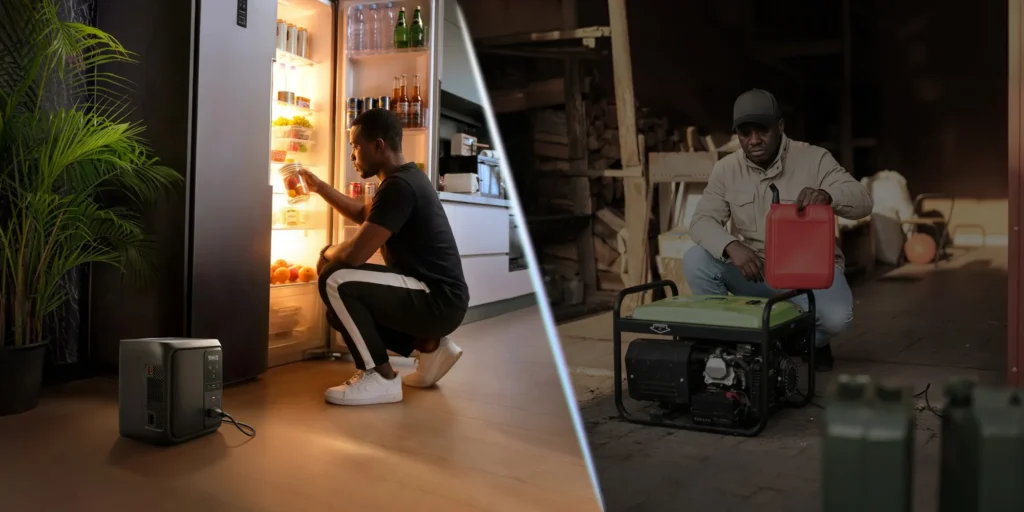
Find out what a power station can power in Nigeria, from fridges and TVs to blenders, iron, water pumps and work devices, and how to choose the right one.
A portable power station can power much more than phones and laptops. But whether it can run a particular appliance and for how long depends on two things people often confuse: the power station’s output and its battery capacity.
In this guide, we’ll show you what a power station can realistically power, what the numbers mean and what to check before buying one for your home, workspace or business.
At Accenta Store, we help customers choose power stations based on what they actually need to power, rather than simply recommending the biggest model. We’ve helped 200+ power station owners across Nigeria find solutions for their homes, work and businesses.
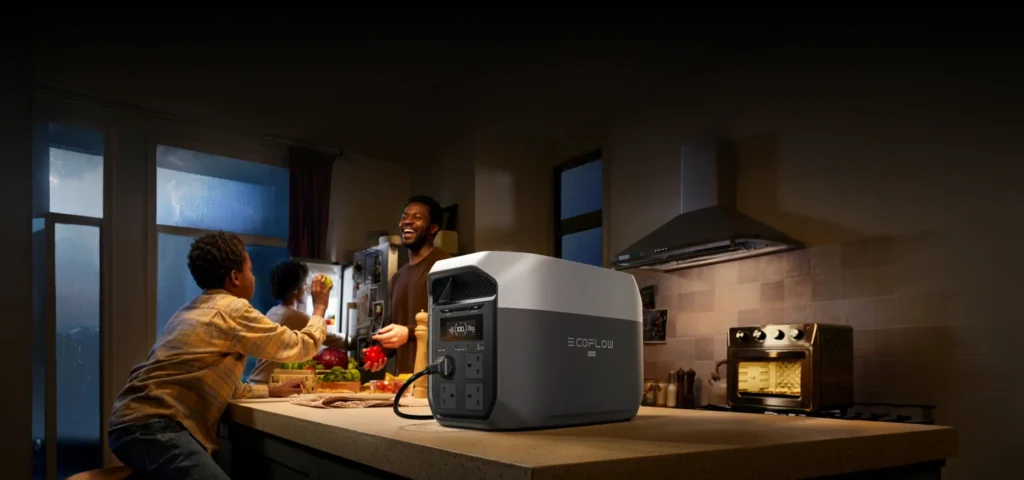
So, what Can a PowerStation Actually Power in Nigeria?
The short answer: it depends on the power station
Not every power station can run every appliance.
A small power station may comfortably handle:
- Laptop
- Wi-Fi router
- Phone
- LED lights
- Fan
- TV
A higher-output model can potentially handle appliances such as:
- Refrigerator
- Blender
- Air fryer
- Pressing iron
- Microwave
- Washing machine
- Water pump
But there’s an important distinction:
Being able to power an appliance doesn’t necessarily mean it can power it for a long time.
That’s where watts (W) and watt-hours (Wh) come in.
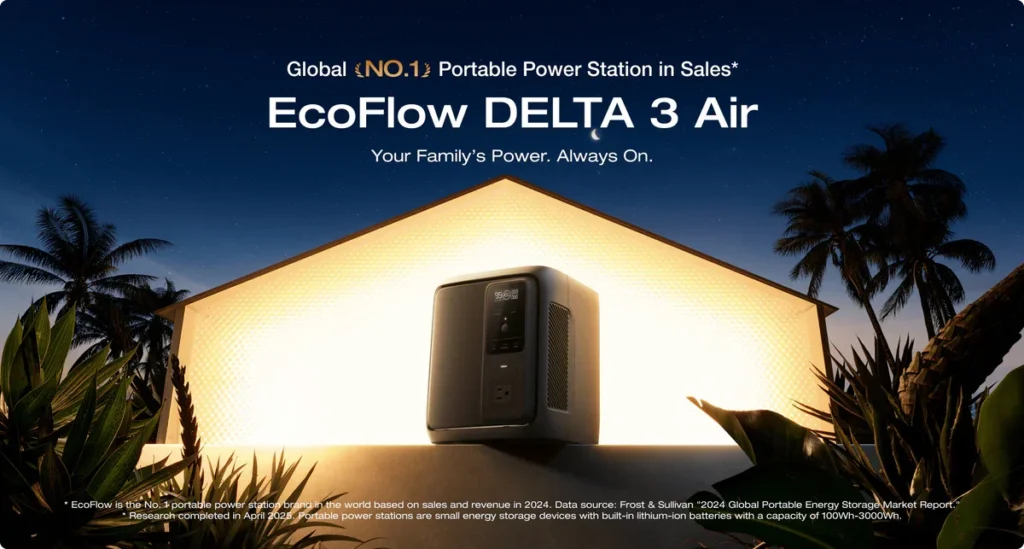
Watts vs watt-hours: the two numbers you need to understand
1. Watts (W) — what the power station can run
The output wattage tells you how much power the inverter can deliver to your appliances.
For example, if a power station has a continuous output of 1,000W, you shouldn’t expect it to continuously run an appliance that requires 1,500W.
This is why a bigger battery does not automatically mean a power station can run bigger appliances.
2. Watt-hours (Wh) — how long it can run them
Wh refers to the amount of energy stored in the battery.
In simple terms: Higher Wh = more energy available for longer runtime.
So when comparing power stations, don’t look at battery capacity alone. You need to consider both output power and battery capacity.
What appliances can a power station run?
Here’s a practical way to think about it.
| Appliance | What to consider |
| Laptop | Usually relatively low power; suitable for many power stations |
| Wi-Fi router | Very low power; ideal for extended backup |
| TV | Usually manageable on many small-to-medium stations |
| Fan | Generally manageable, but check its actual wattage |
| Fridge | Check both running and startup/surge requirements |
| Blender | High short-term power draw; check output rating |
| Air fryer | High continuous power requirement; output rating matters |
| Water pump | Motor startup can require significantly more power |
| Microwave | High power requirement; requires a suitably rated inverter |
| Washing machine | Check both the machine’s running load and motor/heating requirements |
Important: Appliance wattage varies considerably between models. The figures above are categories, not guarantees. Always check the rating label or manufacturer’s specifications for the specific appliance you want to run.
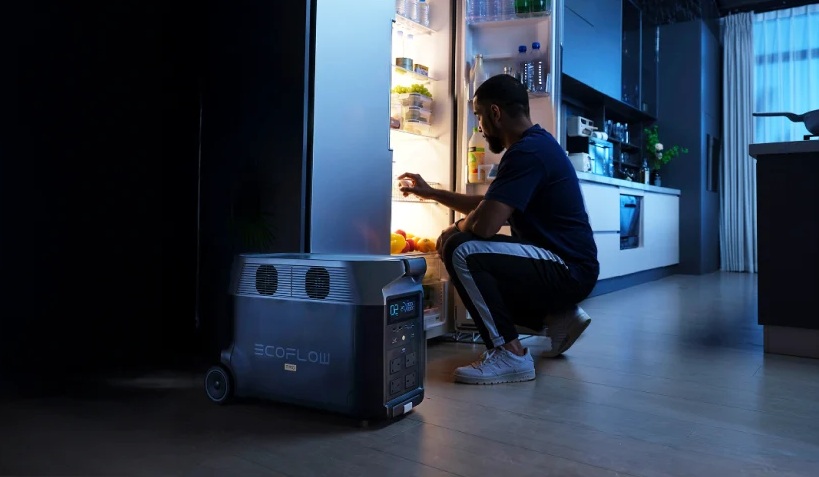
Can a power station run a fridge?
Yes — some can.
But a refrigerator is one appliance where you shouldn’t look only at its average running wattage.
A fridge has a compressor, and compressors can require a higher amount of power when starting. So before choosing a power station for your fridge, check:
- The fridge’s running wattage
- Its startup/surge requirement
- The power station’s continuous output
- Its surge/peak output
- The battery capacity
This is one reason we recommend customers tell us exactly what they want to power before choosing a model.
What about a blender, air fryer or water pump?
These appliances require more attention.
Blender
A blender may have a relatively high wattage despite only being used for a few minutes at a time. A suitable power station can handle it, but the inverter needs enough output power.
Air fryer
Air fryers can use significant continuous power because of their heating element. So don’t assume that a power station with a large battery can automatically run one. Check the inverter output first.
Water pump
Water pumps are particularly important to check because they use a motor. The startup power can be considerably higher than the pump’s normal running power.
For motor-driven appliances, surge capacity matters.
How long will a power station last?
This is where many buyers make another mistake. A power station’s battery capacity isn’t the same thing as the amount of time an appliance will run.
A simple starting point is:
Battery capacity (Wh) ÷ appliance load (W) = theoretical runtime
But actual runtime is lower because of inverter losses and other factors.
For example, a 1,000Wh power station running a 100W load would not necessarily give exactly 10 hours of usable runtime.
Actual runtime depends on:
- Appliance power draw
- Inverter efficiency
- Battery condition
- Operating conditions
- Whether the appliance cycles on and off
- Startup loads
This is particularly important with refrigerators and other compressor-based appliances.
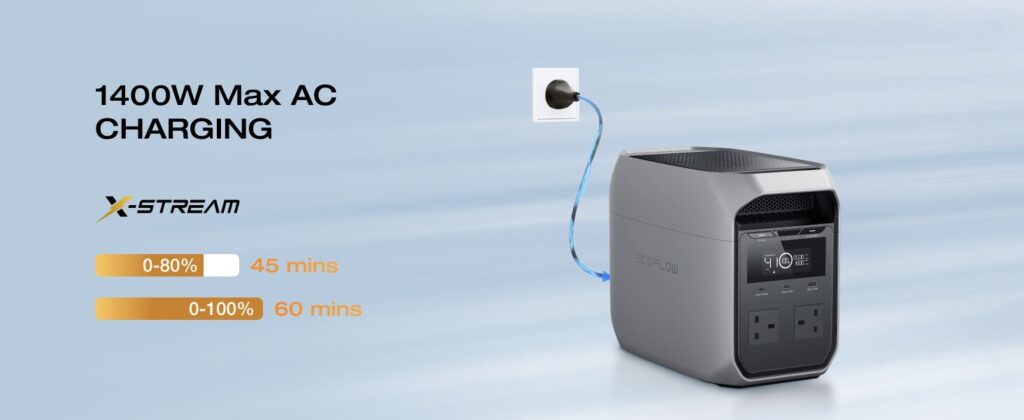
So, what size power station do you need?
Instead of starting with: “I want a 2,000Wh power station.”
Start with: “What do I want to power?”
Make a list of your essential appliances. For example:
| Home backup | Remote work | Small business |
| Fridge/Freezer TV Fan Router Lights Washing Machine Blender Water Pump | Laptop Monitor Router Phone Fan Electric table | Laptop Lights CCTV/Security camera Router TV/display |
Then check the wattage of each appliance and decide which ones need to run at the same time.
That’s a much better starting point for choosing a power station.
One important thing: bigger isn’t always better
A common mistake is assuming: More battery = better power station.
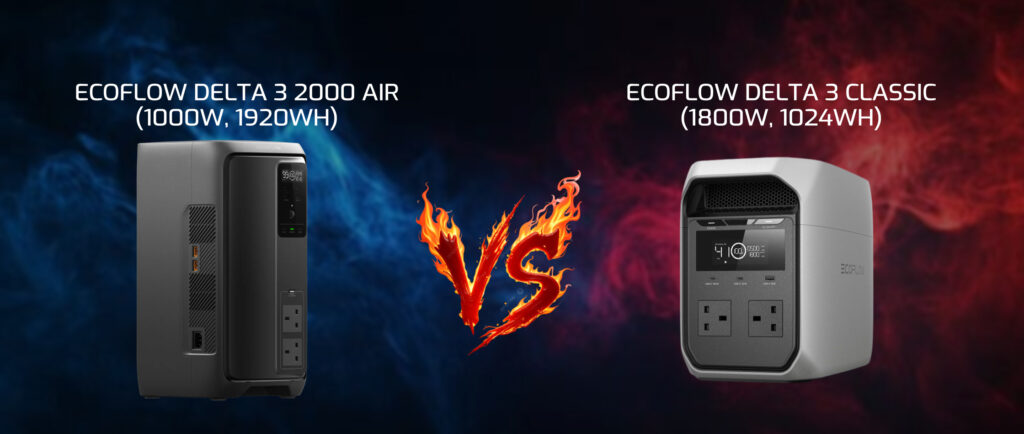
Not necessarily. Imagine two power stations:
| Power Station A | Power Station B | |
| Battery Capacity | 2,000Wh | 1,000Wh battery |
| Inverter Capacity | 1,000W output | 1,800W output |
Power Station A has more stored energy and may provide longer backup for lower-power appliances. But Power Station B has more inverter headroom and may be better suited to appliances with higher power requirements.
The right power station is the one that matches your actual power needs.

What should you check before buying?
Before buying a portable power station in Nigeria, check these five things:
1. Battery capacity
Look at the Wh rating to understand how much energy is stored.
2. Continuous output
Check the W rating to know what appliances the inverter can continuously support.
3. Surge/peak output
Important for appliances with motors and compressors such as fridges and water pumps.
4. Charging options
If you experience long outages, consider how quickly the station can recharge and whether solar charging is important to you.
5. Your actual appliance list
This is probably the most important one. Don’t buy a power station simply because someone says it’s “powerful”, choose it based on what you need to power.

How we help at Accenta
At Accenta Store, we don’t believe in simply selling you the biggest power station we have.
We consult beyond the sale.
Tell us:
- What appliances you want to power
- Their wattage, if you know it
- How many hours of backup you need
- Whether you want to recharge with solar
We’ll help you understand the options and choose a power solution that fits your needs.
We’re an authorized EcoFlow vendor in Nigeria, and we provide Pay on Delivery, nationwide delivery and after-sales support.
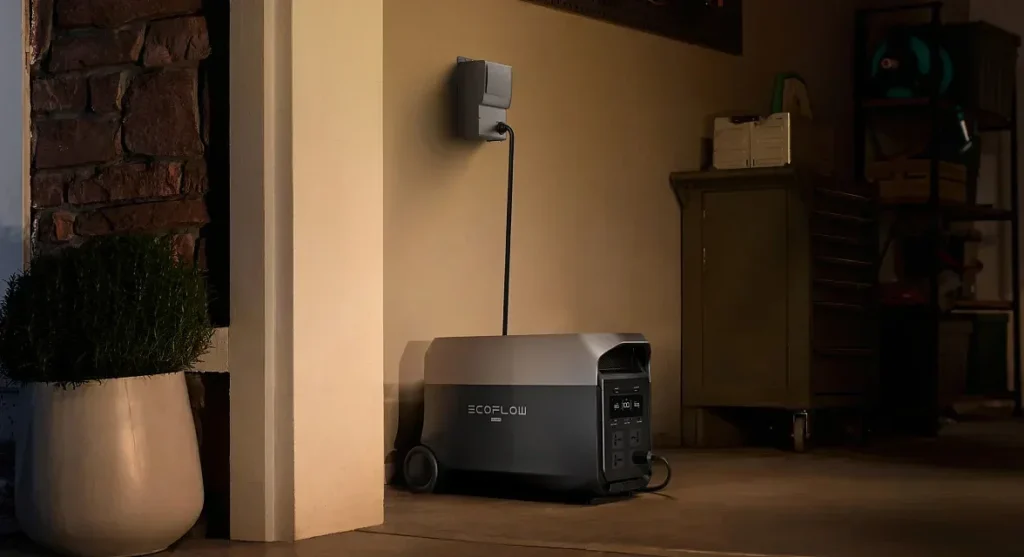
Not sure what power station you need?
This is where we can help.
Send us:
- The appliances you want to power
- Their wattage, if you know it
- How many hours of backup you need
We’ll help you work out which EcoFlow power station or solar generator is suitable for your setup.
WhatsApp/Call: 08032170613