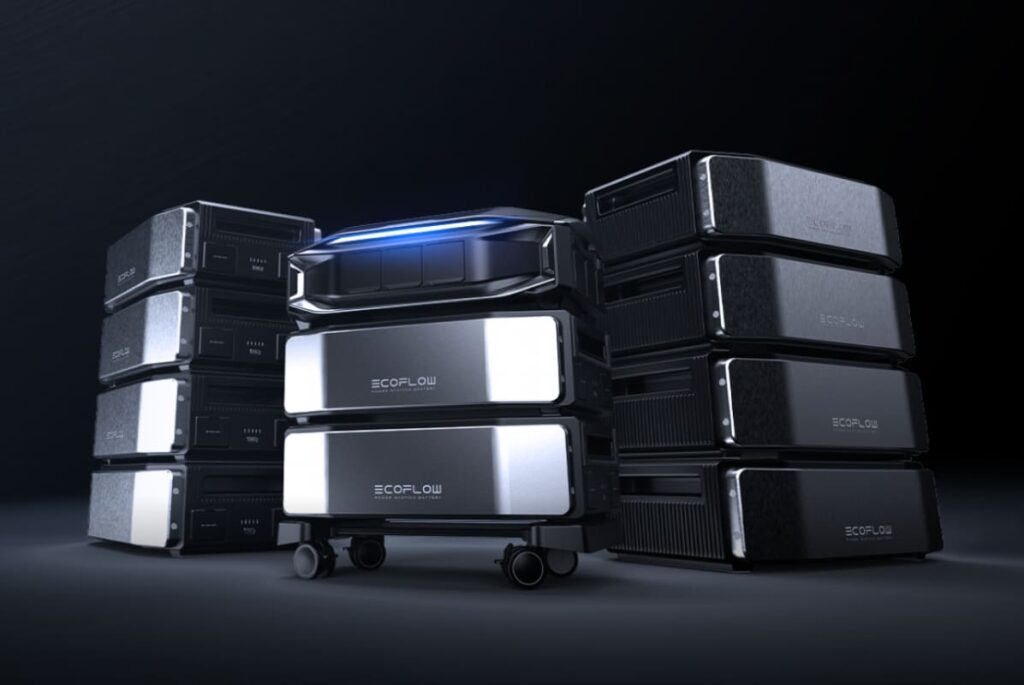
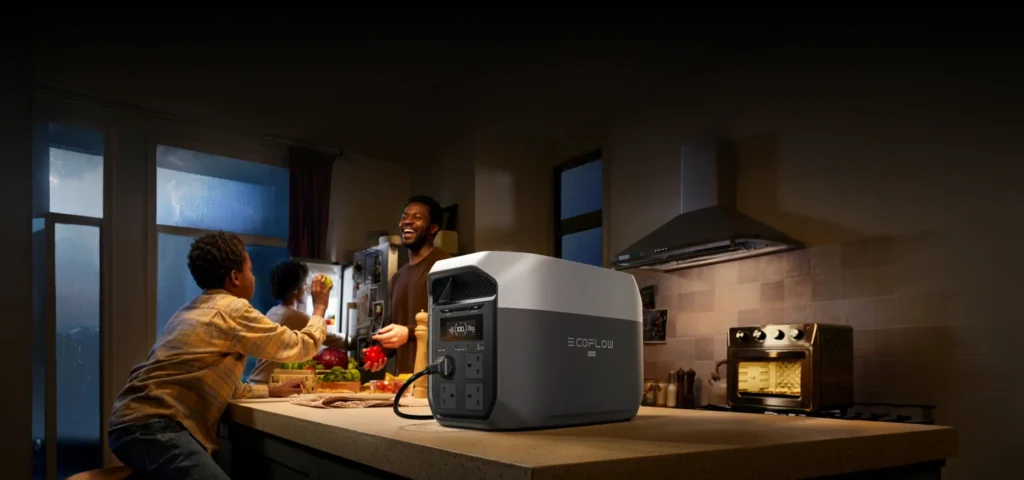
Find out what the EcoFlow DELTA 3 Max can power in Nigeria, including a fridge, TV, blender, water pump, iron, and microwave, plus estimated runtimes.
If you’re considering buying a power station for your home, one question probably matters more than anything else:
What can it actually power when NEPA takes the light?
Can it keep your fridge running? Can you watch TV, use a blender, iron your clothes or run a water pump? And how long can the battery last before you need to recharge it?
The EcoFlow DELTA 3 Max is designed for people who need more than basic backup power for phones and laptops. With a 2,048Wh battery and 2,400W of rated AC output, it can support a range of household appliances, provided their power requirements are compatible with the unit.
In this guide, we’ll look at what the EcoFlow DELTA 3 Max can power, what affects runtime and how to decide whether it’s suitable for your home in Nigeria.
What Is the EcoFlow DELTA 3 Max?
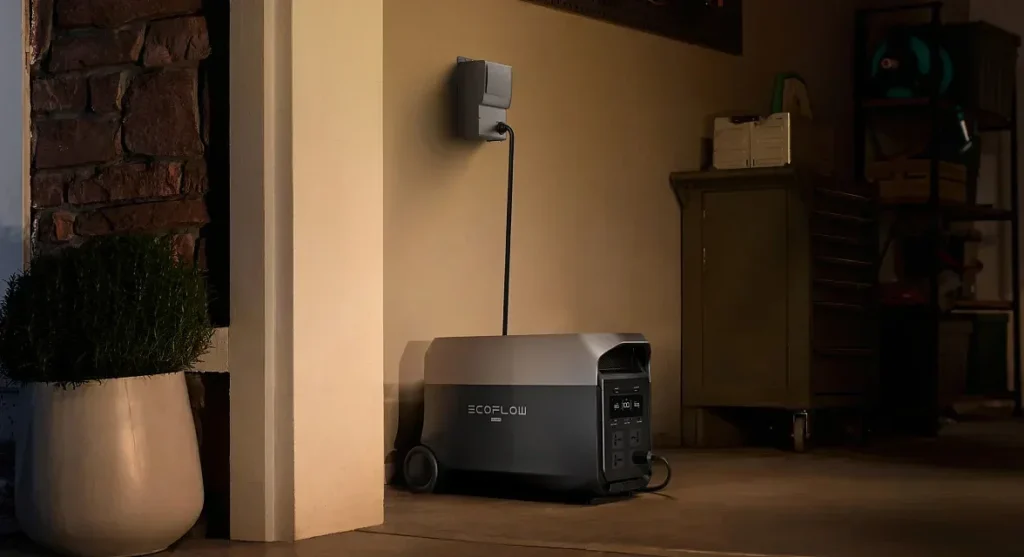
The EcoFlow DELTA 3 Max is a portable power station designed to provide backup electricity for home appliances, work equipment and other compatible devices.
Unlike a traditional petrol generator, it stores electrical energy in a rechargeable battery and delivers power through its output ports. You can recharge it from a wall outlet, a compatible generator or solar panels.
Here are its key specifications:
| Feature | Specification |
| Battery capacity | 2,048Wh (approximately 2kWh) |
| Rated AC output | 2,400W |
| X-Boost support | Up to 3,200W for compatible devices |
| Battery chemistry | LiFePO4 (LFP), can last up to 10 years |
| Solar input | Up to 500W |
| UPS switching | Less than 10ms |
Two figures are particularly important when choosing a power station: watts (W) and watt-hours (Wh).
Watts vs Watt-Hours: What Do They Mean?
Understanding these two measurements will help you determine which appliances the DELTA 3 Max can run and how long it may run them.
1. Watts (W): What can it run?
Watts measure how much power an appliance needs at a particular moment.
For example:
- A television might consume 90W.
- A blender might draw 500W while operating.
- A microwave might draw 1,300W.
- A water pump may have a substantial starting surge when its motor switches on.
The DELTA 3 Max has a rated AC output of 2,400W. This means the combined load of connected AC appliances generally needs to stay within that output limit.
EcoFlow’s X-Boost feature can support certain compatible devices with higher rated power demands, up to the advertised 3,200W level. However, X-Boost is not a guarantee that every appliance rated above 2,400W will work. Compatibility, operating conditions and appliance behaviour matter.
2. Watt-hours (Wh): How long can it run?
Watt-hours measure energy capacity.
The DELTA 3 Max has 2,048Wh of battery capacity. The more energy your appliances consume, the faster that stored energy is used.
For example, an appliance drawing 100W continuously would theoretically use 1,000Wh in 10 hours.
Actual runtime will be lower because of conversion losses, power station overhead and operating conditions.
Remember: A power station’s output determines what it can run, while its battery capacity helps determine how long it can run it.
What Appliances Can the EcoFlow DELTA 3 Max Power?
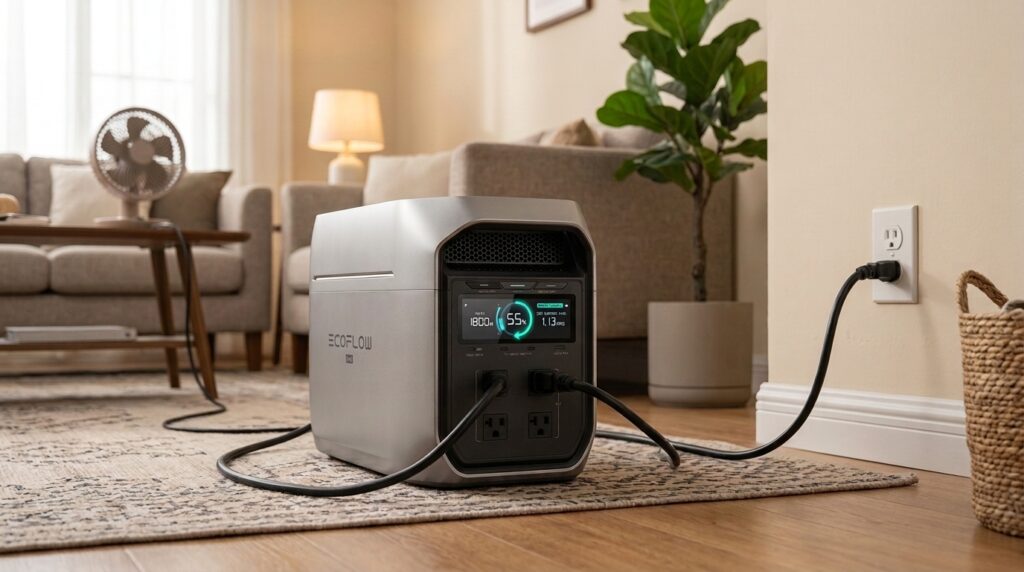
The DELTA 3 Max can support a variety of household appliances, including many of the devices Nigerians rely on every day.
The table below gives illustrative estimates based on the stated appliance loads. These are not guaranteed runtimes or results from a controlled test.
| Appliance | Illustrative power draw | What to know |
| Refrigerator | 120W while running | Compressor cycling and startup surge affect runtime and compatibility. |
| 55-inch QLED 4K TV | 90W | A suitable load for home entertainment backup. |
| Water pump | Depends on model; a 0.75HP pump requires particular care | Check electrical input and motor startup surge before connecting it. |
| Electric iron | 300W | Heating cycles can change average consumption. |
| Blender | 500W while operating | Motor startup and how frequently you blend affect energy use. |
| Microwave | 1,300W input | Check the appliance’s electrical input rating and account for the time spent heating food. |
| Laptop | Often around 45–100W | Actual consumption varies with the model and workload. |
| Wi-Fi router | Often around 10–20W | A low-power device that may run for many hours. |
| Fan | Often around 30–75W | Runtime depends on the fan’s actual power draw and speed setting. |
The wattages above are examples, not universal ratings. Check the appliance label or manufacturer’s specifications before calculating runtime.
Can the EcoFlow DELTA 3 Max Power a Refrigerator?
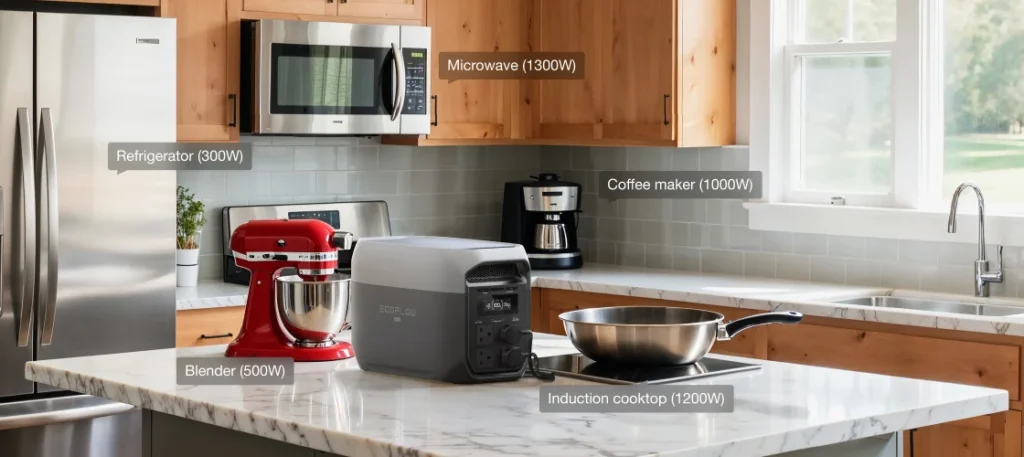
Yes, many refrigerators can be powered by the DELTA 3 Max, provided their electrical requirements are compatible. However, choosing a power station for a refrigerator involves more than looking at the wattage printed on the label.
Consider three things:
- Running power: How much electricity does the fridge consume while its compressor is operating?
- Starting surge: The compressor may briefly draw more power when it starts. The power station must be able to handle this surge.
- Battery capacity: How much energy will the fridge consume over the period you need backup power?
A refrigerator that averages 120W while running does not necessarily consume 120W continuously throughout the day. Its compressor cycles on and off, so actual energy consumption depends on the fridge, temperature settings, room conditions and how often the door is opened.
This is why a runtime calculation based solely on the refrigerator’s running wattage should be treated as a rough estimate.
Can It Power a Water Pump?
A compatible water pump may work with the DELTA 3 Max, but this is an appliance you should check carefully before buying.
A 0.75HP pump is not automatically a 0.75W or 560W electrical load. Horsepower describes mechanical output, and the pump’s electrical input can be higher. Motor startup can also demand considerably more power than normal operation.
Before connecting a pump, check:
- Its rated electrical input in watts or amperes.
- Its operating voltage and frequency.
- Its startup or locked-rotor current, if available.
- Whether its starting demand is compatible with the power station.
If you’re unsure, send Accenta the pump’s model number or rating plate so the requirements can be assessed before you buy.
Can It Power a Blender, Iron or Microwave?
These appliances can be compatible with a power station of this class, but you should still check their actual input ratings.
A blender draws power mainly while its motor is running. An iron cycles its heating element on and off. A microwave may draw more electrical input than its advertised cooking output suggests.
For example, a microwave with a 1,300W electrical input would use approximately 217Wh during 10 minutes of operation at that constant input.
That is a simplified calculation. Actual consumption varies with the cooking setting, duty cycle and appliance design.
For appliances that use heating elements or motors, check both their power requirements and how long you intend to use them.
How Long Can the EcoFlow DELTA 3 Max Last?
There is no single runtime figure that applies to every household because each appliance uses a different amount of energy.
A useful starting point is:
Estimated runtime = usable battery energy ÷ average power consumption
For an illustrative calculation, assume 85% of the DELTA 3 Max’s 2,048Wh rated capacity is available to the AC appliances after conversion losses and other operating overheads.
That gives approximately 1,741Wh of usable energy for this example.
| Appliance | Average watt rating | Approximate runtime |
| Router | 15W | 130+ hours |
| Fan | 50W | 40+ hours |
| 55″ QLED 4K TV | 90W | 20+ hours |
| Refrigerator | 120W | 18+ hours |
| Energy-efficient iron | 300W | 6+ hours |
| Blender | 500W | 4+ hours |
| Microwave | 1300W | 33+ meals heated |
| Water Pump | 0.75HP | 3+ hours |
These are simplified estimates, not guaranteed performance figures. The assumed 85% usable-energy factor is illustrative rather than a verified DELTA 3 Max test result.
For appliances such as refrigerators, pumps and blenders, actual consumption varies over time. If you use several appliances together, their combined energy consumption determines how quickly the battery drains.
Can the EcoFlow DELTA 3 Max Power an Entire Home?
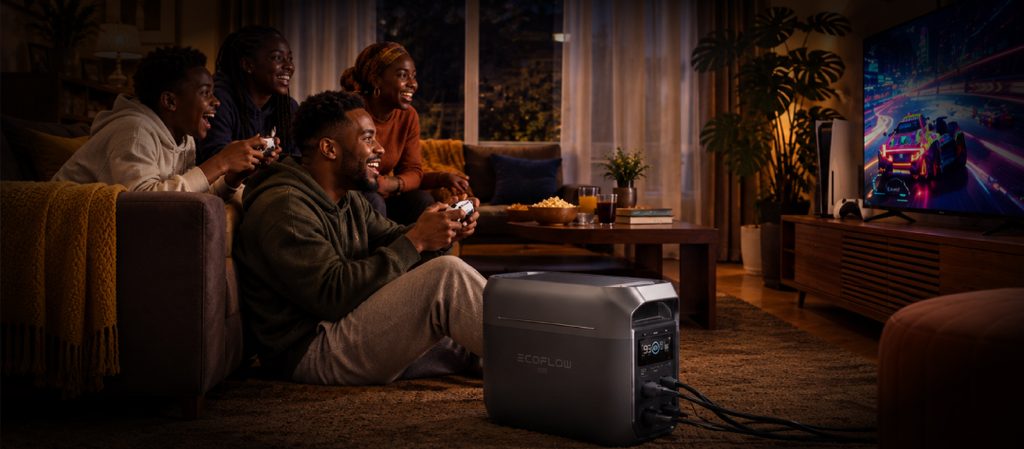
The DELTA 3 Max can support a range of household appliances, but whether it can power your entire home depends on the appliances you want to run, their combined power demand and how long you need backup.
For example, keeping a router, television, lights and a laptop running is very different from simultaneously operating an electric kettle, microwave, water pump and several other high-power appliances.
Before choosing a home backup solution, identify:
- The appliances you want to keep running.
- Their actual electrical input ratings.
- Which appliances need to operate simultaneously.
- How many hours of backup you want.
- Whether you intend to recharge from solar panels.
If you want to connect a power station to selected household circuits through a changeover or transfer arrangement, use a qualified electrician and suitable equipment. Never connect a power station to your home’s wiring in a way that can backfeed the grid.
For larger homes or heavier electrical demands, you may need a different model or an expandable home backup system.
Can Solar Panels Recharge the DELTA 3 Max?
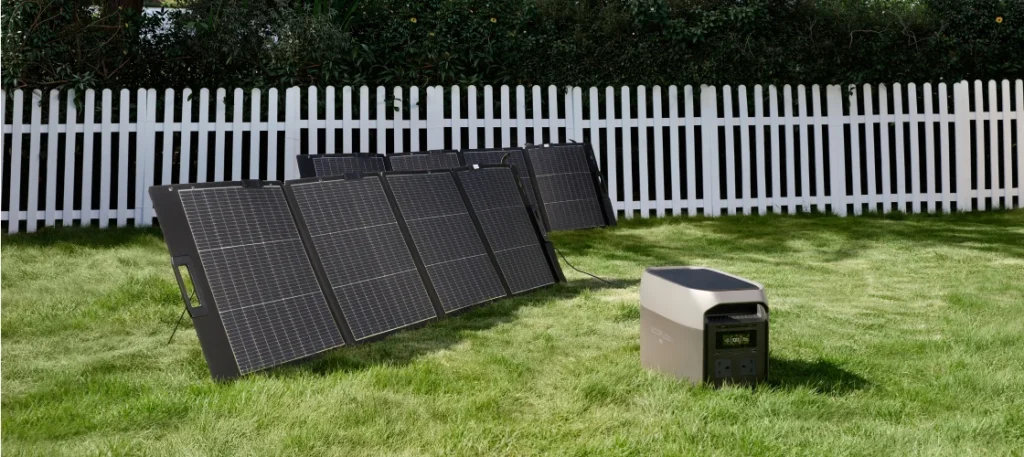
Yes. The DELTA 3 Max supports solar charging with compatible panels, up to its specified 500W solar input.
Solar charging can help replenish the battery during prolonged outages, but actual charging time depends on sunlight, panel orientation, shading, temperature and the amount of energy your home is using while charging.
If you’re considering solar charging, make sure the panels’ voltage, current and connectors meet EcoFlow’s input requirements.
Is the EcoFlow DELTA 3 Max Right for Your Home?
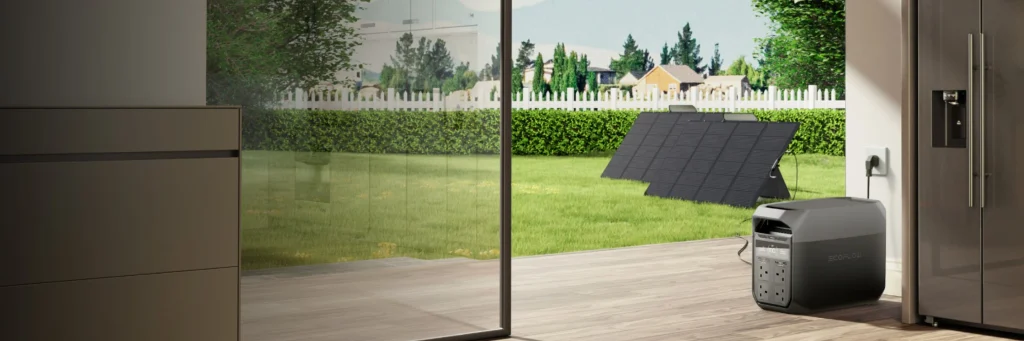
The DELTA 3 Max is worth considering if you want a portable backup power solution with a relatively high AC output and a battery capacity of approximately 2kWh.
It may suit households that need to keep several essential appliances running during power outages, provided the combined load and expected energy use are within the unit’s capabilities.
However, it isn’t automatically the right choice for every home, as there are various models of EcoFlow power stations. If your main requirement is a laptop and router, you may not need this much output. If you want to run many high-power appliances for extended periods, you may need a larger or expandable system.
The best choice depends on your actual power needs, not just the size of the battery.
Need Help Choosing the Right EcoFlow for Your Home?

At Accenta Store, we help customers understand their power requirements and choose an EcoFlow power station based on the appliances they want to run.
We’ve helped more than 200 power station owners across Nigeria, and our approach is simple: start with what you need to power, then choose the right solution.
If you’re considering the EcoFlow DELTA 3 Max, send us your appliance list and tell us how many hours of backup you need. We’ll help you assess whether it suits your setup or whether another EcoFlow model would be a better fit.
We accept pay on delivery, same-day delivery, and nationwide delivery.
Need help choosing the right power station?
If you’re not sure which EcoFlow power station is right for you, reach out to our team. Tell us the appliances or devices you want to power, and we’ll recommend the best option based on your needs and expected usage.
Get in touch with Accenta team today for a recommendation: Email or WhatsApp